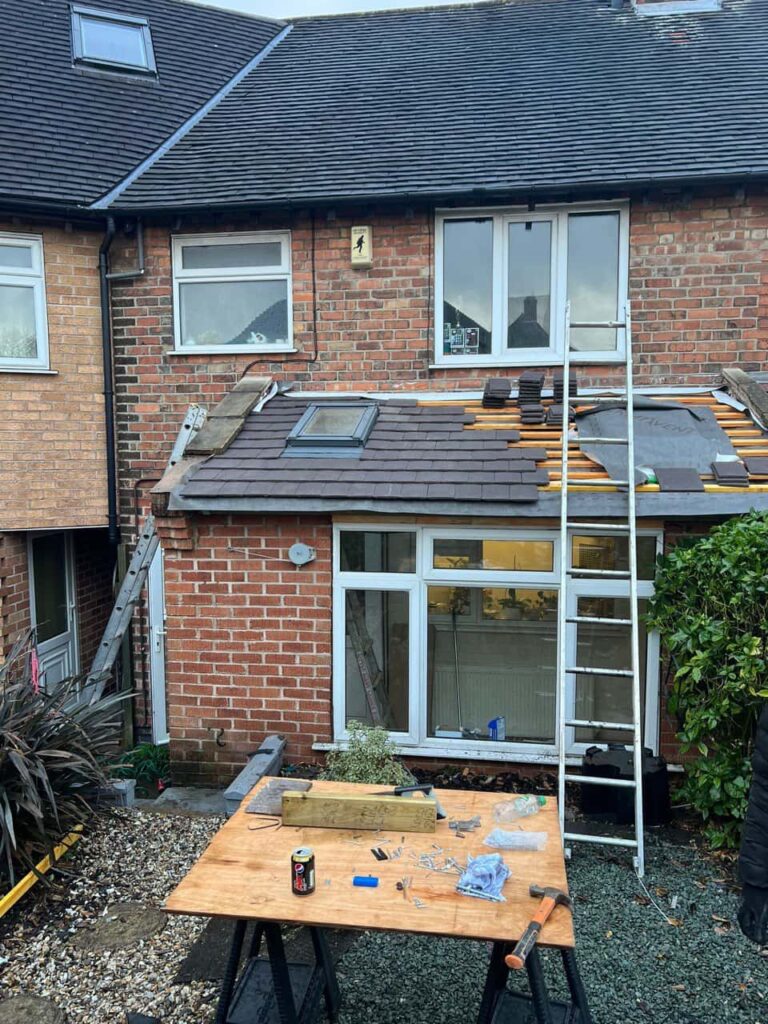
Strong winds and severe weather can place considerable stress on a roof, particularly around exposed edges, ridges, flashing and individual tiles or slates. Some storm-related problems are immediately noticeable, such as a displaced tile on the ground, while others can be far less obvious and only become apparent when water begins entering the property.
After particularly strong winds, it is sensible to pay attention to changes around the roof rather than assuming that the absence of an obvious leak means everything remains unaffected. A tile may have moved without falling completely, flashing can become disturbed, and small openings may allow rainwater beneath the covering during subsequent wet weather.
For property owners in Chalfont St Giles, Buckinghamshire, knowing what to look for after severe weather can help identify potential roof damage early. Importantly, checks should normally be made from safe ground level or from inside the property rather than attempting to climb onto the roof yourself.
What Areas of Your Roof Should Be Checked Following Strong Winds or Storm Damage?
Storm damage does not always affect the entire roof equally. Wind forces can be particularly significant around edges, corners and exposed roof details, while rain can reveal weaknesses at junctions and around previously vulnerable sections.
A useful post-storm assessment therefore involves looking for both external and internal warning signs. Missing roofing materials, unusual roof lines, damp marks, debris around the property and changes within the loft can all provide useful information.
Where something appears different following severe weather, a professional roof inspection can establish whether repair work is actually required and how extensive the problem is.
Check for Missing Roof Tiles
Missing tiles are one of the clearest signs that strong winds have affected a roof.
A tile may become completely detached and fall from the roof, leaving part of the underlying system more exposed to rain. Depending on the location of the missing tile, surrounding materials may also have been disturbed.
Even one missing tile is worth investigating rather than waiting for an internal leak to develop.
Look for Slipped or Displaced Tiles
Storm-damaged tiles do not always fall to the ground.
A tile can slip from its correct position while remaining on the roof. From ground level, this may appear as an uneven section, unusual gap or tile sitting differently from those around it.
A displaced tile can compromise the way the surrounding roof covering sheds water, making timely assessment worthwhile.
Cracked Tiles Can Be Less Obvious
Wind itself is not the only source of storm-related roof damage.
Moving debris or branches can strike roofing materials, potentially causing cracking or breakage. Small defects may be difficult to identify from the ground but can still affect how effectively the covering performs.
If debris has clearly struck the roof, professional inspection may be sensible even when no tile appears completely missing.
Slate Roofs Can Develop Displaced Sections
Slates can also become loose or displaced during severe weather.
A missing slate may leave an obvious opening, while another may have shifted only slightly. Because neighbouring slates overlap to create the weather-resistant covering, movement can affect the protection provided by the surrounding area.
Loose slates should be assessed rather than assumed to remain secure.
Pay Attention to the Ridge
The ridge runs along the uppermost part of many pitched roofs and is highly exposed to weather.
Strong winds can affect ridge tiles, fixings and surrounding materials. From the ground, look for anything that appears noticeably displaced, missing or different from its usual position.
Ridge damage should be professionally examined because of both its location and importance within the roof covering.
Hip Details Can Also Be Exposed
On roofs with hips, these external junctions can receive significant weather exposure.
Hip tiles or associated materials may become disturbed during strong winds. Damage in these locations is not always easily visible from one viewing angle.
A professional inspection can provide a closer assessment where storm exposure is suspected.
Examine Roof Edges From a Safe Position
Roof edges can experience substantial wind forces.
Tiles around verges and eaves may be more exposed than materials located within the central roof area. Look from ground level for obvious changes, missing pieces or sections that no longer appear aligned.
Do not attempt to lean from upper windows or access the roof to obtain a closer view.
Check the Ground for Roofing Debris
Sometimes the first evidence of roof damage is found around the property rather than on the roof itself.
Pieces of tile, slate, mortar or other roofing material on the ground after a storm may indicate that something has become detached above.
If you find unfamiliar roofing debris, arranging an inspection can help establish where it originated.
Do Not Assume Fallen Material Came From an Unimportant Area
A relatively small fragment can still provide useful evidence.
It may have come from a cracked tile, ridge detail, verge or another part of the roof. Without examining the relevant area, it can be difficult to know whether the remaining materials are secure.
Roofing debris should therefore not automatically be discarded as insignificant.
Look for Changes Around Flashing
Flashing is used around roof junctions and other vulnerable interfaces.
Strong weather can expose weaknesses in ageing or already deteriorated flashing. Sections may lift, loosen or become less effective at directing water away from a junction.
Because flashing problems can be difficult to identify from ground level, signs of water ingress around corresponding internal areas may also be important.
Chimney Junctions Deserve Attention
Where a chimney meets the roof, several materials and details work together to prevent water ingress.
Strong winds and driving rain can expose existing weaknesses around these junctions. If damp begins appearing internally near a chimney following severe weather, the surrounding roof details should be investigated.
The visible damp mark does not necessarily identify the exact external entry point.
Check Valleys for Signs of Problems
Roof valleys carry water from adjoining slopes and can handle substantial volumes of rain during storms.
Debris can sometimes collect in these channels, while existing deterioration may become more apparent during intense rainfall. Problems around the surrounding tiles or valley materials can also contribute to water ingress.
Valley areas should be assessed carefully where post-storm leakage has developed.
Gutters Can Provide Clues About Roof Damage
After strong winds, gutters may contain more than ordinary leaves and debris.
Fragments of roofing material can sometimes collect within them, providing another indication that something above has deteriorated or become damaged.
Changes to the guttering itself may also be visible from ground level, particularly where sections have moved or become detached.
Check Whether Fascias and Soffits Look Different
Storms can affect more than tiles and slates.
Fascias, soffits and other roofline components may become loosened or displaced in exposed conditions. From a safe position, look for sections that appear detached, uneven or noticeably different from before the storm.
These areas form part of the wider roofline and should not be overlooked during an inspection.
Look Inside the Loft for Water Ingress
External checks should be accompanied by an internal inspection where the loft is safely accessible.
Look for unexpected damp patches, dripping water or areas where the underside of the roof appears noticeably wet. Signs may be particularly relevant during or shortly after rainfall.
A torch can help with visibility, but avoid touching electrical components or entering any area that appears unsafe.
Damp Timbers Can Indicate Water Entry
Roof timbers can provide clues about a developing leak.
Freshly damp areas, staining or visible moisture may indicate that rainwater has entered through the roof covering. However, the point where moisture becomes visible internally may not be directly beneath the external defect.
Further investigation is often needed to locate the actual source.
Check the Underlay Where It Is Visible
In some lofts, portions of the roofing underlay can be seen from inside.
Tears, holes or obvious water tracking may provide useful information. However, large parts of the underlay may remain concealed behind structural components and insulation.
An internal visual check is therefore useful but should not be treated as a complete roof assessment.
Look for New Damp Marks on Ceilings
Not every roof leak becomes visible inside the loft first.
Water may eventually produce staining on ceilings or upper walls. A new mark appearing shortly after strong winds and heavy rain should not automatically be dismissed because it is small.
Early staining can be the first visible indication that moisture is entering somewhere above.
Water May Travel Before Becoming Visible
Roof leaks can be deceptive.
Rainwater entering through one part of the covering may travel along underlay, timbers or other surfaces before dripping into the interior. Consequently, the damp mark inside the property may be some distance from the actual roof defect.
This is one reason professional leak tracing can be valuable after storm damage.
Listen for Unusual Sounds During Windy Conditions
Changes to the roof are sometimes heard before they are seen.
A newly loose component may create unfamiliar rattling or movement during windy weather. Although sounds alone cannot identify the problem, a noticeable change after a storm can justify closer investigation.
Avoid attempting to locate the sound by accessing the roof yourself.
Check for Daylight in the Loft Carefully
An obvious new opening in the roof may sometimes allow daylight into the loft.
However, the absence of visible daylight does not prove that the roof is watertight. Small openings capable of admitting wind-driven rain may be difficult to see from inside.
This check should therefore be considered only one part of a broader assessment.
Strong Winds Can Expose Existing Weaknesses
Not every defect discovered after a storm was necessarily created entirely by that weather event.
A tile may already have been cracked, a fixing may have deteriorated, or flashing may have been approaching the stage where attention was required. Strong winds can expose these weaknesses by placing additional stress on vulnerable materials.
The important point is to assess the current condition rather than trying to judge the roof from appearance alone.
Older Repairs May Need Checking
Previously repaired sections can also deserve attention following severe weather.
A sound repair may remain completely unaffected, but ageing patchwork or deteriorated surrounding materials can become vulnerable over time. If a known repair area appears different following a storm, professional assessment can determine whether further work is necessary.
Previous repair does not automatically mean the area has failed.
A Roof Can Be Damaged Without Immediately Leaking
This is an important point for homeowners.
A displaced tile or disturbed detail may not produce water ingress during the first rainfall. The direction of wind and rain can influence whether moisture reaches the opening.
Waiting for an obvious internal leak is therefore not always the best way to determine whether storm damage has occurred.
Driving Rain Can Reveal Small Weaknesses
Storm conditions often combine strong winds with rain.
Wind can push rain towards roof junctions and beneath areas that normally remain relatively protected. This may expose small defects that were not previously obvious during ordinary rainfall.
Leaks that only appear during particularly severe weather should still be investigated.
One Missing Tile Does Not Necessarily Mean Widespread Damage
Storm damage should be assessed proportionately.
Finding one displaced tile does not automatically mean the entire roof has been compromised. In many cases, damage can remain localised and suitable for targeted repair.
A professional inspection helps establish the actual extent rather than assuming either that the problem is insignificant or that extensive work is automatically required.
Several Damaged Areas May Indicate Wider Storm Impact
Conversely, multiple displaced tiles or defects across different roof sections deserve broader assessment.
If ridge details, roof edges and individual tiles have all been affected, examining the complete roof can help identify the full extent of the damage.
Repair decisions should be based on the pattern found during inspection.
Avoid Walking on a Storm-Damaged Roof
Homeowners should not climb onto the roof to carry out their own close inspection.
Roofing materials may have become loose, and wet surfaces can be slippery. Damage may also be present beneath an area that appears normal from above.
Ground-level observations and safe internal checks can provide useful information while leaving close inspection to appropriately equipped professionals.
Do Not Attempt to Push Tiles Back From a Ladder
A displaced tile can appear deceptively straightforward to correct.
However, the surrounding materials and fixings may also have been affected, and working from a ladder near roof level introduces unnecessary risk.
The cause and extent of movement should be established before repairs are carried out.
Prompt Inspection Can Limit Further Water Ingress
Small storm-related defects can become more significant if repeatedly exposed to rain.
A missing tile may allow water to reach underlay, while disturbed flashing can continue admitting moisture around a vulnerable junction. Addressing appropriate repairs promptly can help prevent repeated wetting of surrounding components.
Early attention is particularly useful when further poor weather follows.
Wet Roofing Components Need Proper Assessment
If water has entered the roof, it is important to understand what has been affected.
The visible leak may represent only part of the issue. Underlay, battens and accessible timbers can sometimes be exposed to moisture depending on the location and duration of the defect.
Professional inspection can determine whether the problem remains localised.
Storm Damage Does Not Automatically Mean Roof Replacement
Severe weather can cause anything from a single displaced tile to more extensive deterioration.
Many problems can be addressed through targeted roof repairs where the surrounding roof remains in serviceable condition. Replacement should not be assumed simply because storm damage has occurred.
The appropriate response depends on the extent of the damage and the condition of the roof as a whole.
Existing Roof Condition Influences the Repair Approach
Two roofs exposed to similar weather can respond very differently.
A roof in otherwise sound condition may experience only isolated damage. An ageing roof already containing widespread deterioration may reveal several problems after strong winds.
Assessment should therefore consider both the recent storm damage and the wider condition of the roofing system.
Repairs Should Address the Cause, Not Only the Visible Symptom
If a tile has moved, it is useful to understand why.
The problem may involve the tile itself, its fixing, the surrounding materials or deterioration within the supporting area. Simply returning a component to its previous position without assessing the cause may not provide an appropriate repair.
Cause-first assessment helps determine what work is actually required.
A Professional Roof Inspection Can Identify Less Obvious Damage
Some roof defects are difficult to recognise from ground level.
A professional roofer can inspect vulnerable areas more closely, assess displaced materials and look for signs that may not be apparent to the homeowner.
This can be particularly useful when a storm has been severe but no obvious internal leak has yet developed.
Why Professional Storm Damage Roof Repairs Add Value
Effective storm damage repair starts by determining what has actually changed and whether the problem is isolated or part of wider deterioration. Tiles, slates, ridges, hips, valleys, flashing, roof edges and other relevant areas may all need consideration depending on the roof.
At LS Roofing Chalfont St Giles, we assess the condition of the affected roofing area before recommending appropriate repair work. The aim is to identify the source of the problem, address damaged components where required and avoid suggesting more extensive work than the roof genuinely needs.
For properties in Chalfont St Giles, Buckinghamshire, this considered approach can help ensure storm-related roof problems are dealt with according to their actual extent.
Knowing What Changed After the Storm Is Useful
If possible, make a note of anything that appears different after severe weather.
This might include a new damp mark, roofing debris on the ground, an unusual gap in the tiles or water appearing in the loft. Knowing when the change first became noticeable can provide useful information during professional assessment.
Photographs taken safely from ground level may also help you keep track of visible changes.
Conclusion
After strong winds or stormy weather, it is sensible to check your roof and surrounding property for signs of damage. Missing or slipped tiles, displaced slates, disturbed ridge or hip details, roofing debris, flashing problems and changes around roof edges can all indicate that the weather has affected the roof.
Internal warning signs are equally important. Fresh damp marks, wet areas within the loft or water staining on ceilings can indicate that rain has found a route through the roofing system. However, the location where moisture appears may not be directly beneath the original defect.
Checks should be made safely from ground level and from accessible internal areas rather than by climbing onto the roof. If you notice signs of storm damage at your property in Chalfont St Giles, Buckinghamshire, contact LS Roofing Chalfont St Giles. We can assess the affected area and recommend appropriate roof repairs based on the condition and extent of the damage.
Call us on: 01494 302 499
Click here to find out more about LS Roofing Chalfont St Giles
Click here to complete our contact form and see how we can help with your roofing needs.